4 posts tagged with "JetStream2"

View All Tags

Powering CIROH DevCon 2026: How CIROH and 2i2c Ran Cloud Computing at Scale


· 9 min read
Arpita Patel
Assistant Director, IT and DevOpsAlabama Water Institute
April Johnson
Community and People Lead2i2c
Benjamin Lee
Development Operations EngineerAlabama Water Institute
Nia Minor
Graduate Research AssistantAlabama Water Institute
Harsha Vemula
DevOps EngineerAlabama Water Institute

At the 2026 CIROH Developers Conference (University of Utah, May 27–29) participants used a variety of tools and models on cloud infrastructure they'd never had to install, configure, or even think about. To enable that seamless experience, our Research Cyberinfrastructure team provisioned cloud resources for 15 hands-on workshops across three days in close collaboration with our partners at 2i2c. Here's what we ran, and how.

What we provisioned, by the numbers

Running an event of this scale requires more than just a single cloud context, as each workshop posed its own computing and data access requirements. CIROH Cyberinfrastructure met this challenge via a coordinated stack spanning multiple cloud providers and services. Across the 15 workshops that needed infrastructure (14 requests), the R2OHC cloud provisioned the following:

ProviderWorkshopsWhat it carried
2i2c JupyterHub on GCP12A mix of Small, Medium, Large, and GPU servers; 9 workshops ran on custom-built images
AWS3NRDS, HydroServer, TEEHR
Google NWM BigQuery API2Input data for Flood Inundation Mapping (multi-source DB / HAND visualization) and Hydroinformatics (Essential Geospatial Skills)
NSF Access1GPU-powered VMs for the "Talk to NRDS" LLM workshop

For 12 of these workshops, their backbone was the CIROH–2i2c JupyterHub, a managed JupyterHub environment that 2i2c operates on Google Cloud. For the conference, we provisioned a dedicated Workshop Hub: an ephemeral environment that lives only for the duration of the event and then spins back down.


Evaluating NextGen’s Performance in the MARFC Region with NGIAB

· 7 min read
Hudson Finley Davis
HydrologistNOAA Office of Water Prediction
Seann Reed
HydrologistNOAA Office of Water Prediction
Josh Cunningham
Software EngineerAlabama Water Institute
Arpita Patel
DevOps Manager and Enterprise ArchitectAlabama Water Institute
James Halgren
Assistant Director of ScienceAlabama Water Institute
Sifan A. Koriche
Research [Hydrologic] ScientistAlabama Water Institute
Trupesh Patel
Research Software EngineerAlabama Water Institute

The National Weather Service's Middle Atlantic River Forecast Center (MARFC) sees large variations in the performance of the National Water Model 3.0. Through its support for regionalized parameters and models, NOAA-OWP’s Next Generation Water Resources Modeling Framework (NextGen framework) offers a potential solution to address these inconsistencies. As such, this study took advantage of NextGen in a Box (NGIAB) to evaluate the NextGen framework’s performance in the MARFC region.

This study evaluated three operational hydrologic modeling frameworks targetted at the National Water Model (NWM): the Community Hydrologic Prediction System (CHPS), the NextGen framework, and version 3.0 of the National Water Model itself.

  • CHPS is the current operational framework used by NOAA's River Forecast Centers. It incorporates the SNOW-17 model for snowmelt and the Sacramento Soil Moisture Accounting (SAC-SMA) model for runoff generation.
  • For the early phases of this study, the NextGen framework was used with the default model configuration provided by the NGIAB ecosystem, which combines the Noah-OWP-Modular land surface model and the Conceptual Functional Equivalent (CFE) rainfall runoff model [2].
    • After initial runs with the baseline configuration, Noah-OWP-Modular was replaced with SNOW-17 output and simplified Potential Evapotranspiration (PET) values from the MARFC database.
    • The models were calibrated using two objective functions: Kling-Gupta Efficiency (KGE) [6][7] and Nash-Sutcliffe Efficiency (NSE) [4][5].
  • The National Water Model 3.0 uses the Noah-MP land surface model coupled with the Weather Research and Forecasting Hydrologic model (WRF-Hydro) [2][3] to simulate hydrological processes across CONUS.

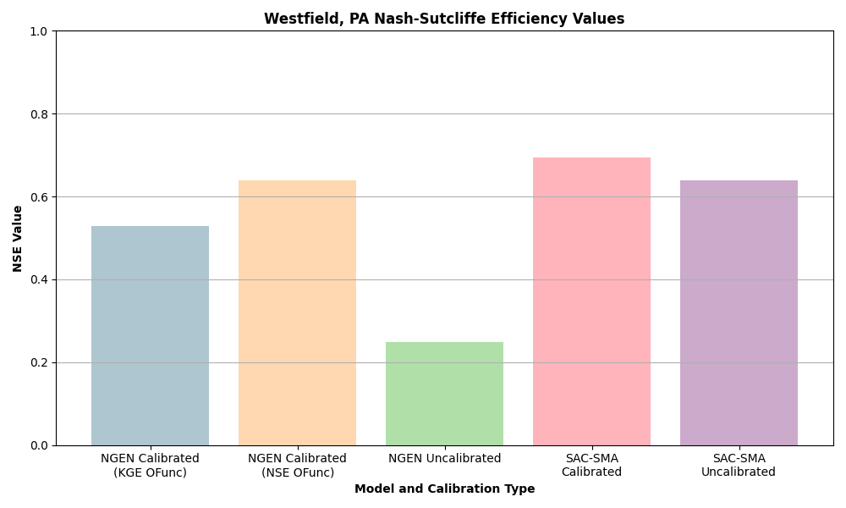
The case studies focused on the Westfield and Elkland basins in North-Central Pennsylvania. These basins provide good locations for comparison due to the presence of USGS stream gages and their "flashy" behavior, characterized by rapid and unpredictable rises and falls in streamflow. Additionally, both Westfield and Elkland were sites of catastrophic flooding during Tropical Storm Debby in 2024, which allowed for the models to be evaluated on a recent extreme flood event. Results from Westfield, PA are shown in Figure 1.

A bar graph titled 'Westfield, PA Nash-Sutcliffe Efficiency values'. SAC-SMA displayed the best performance, closely followed by SAC-SMA Uncalibrated and NGen Calibrated (NSE OFunc). NGen Calibrated (KGE OFunc) fell slightly further behind, while NGEN Uncalibrated was by far the lowest.

Figure 1) Nash-Sutcliffe Efficiency (NSE) Metric for simulations from 2007 to 2020.

DevCon 2025: A DevOps and Cyberinfrastructure Success Story

· 3 min read
Arpita Patel
DevOps Manager and Enterprise ArchitectAlabama Water Institute

The recent DevCon 2025 event showcased not just cutting-edge development practices, but also demonstrated how modern DevOps principles and cloud infrastructure can seamlessly support large-scale technical workshops. Our team had the privilege of providing IT infrastructure and support for over 200 attendees, creating a robust learning environment through an exemplary public-private partnership.

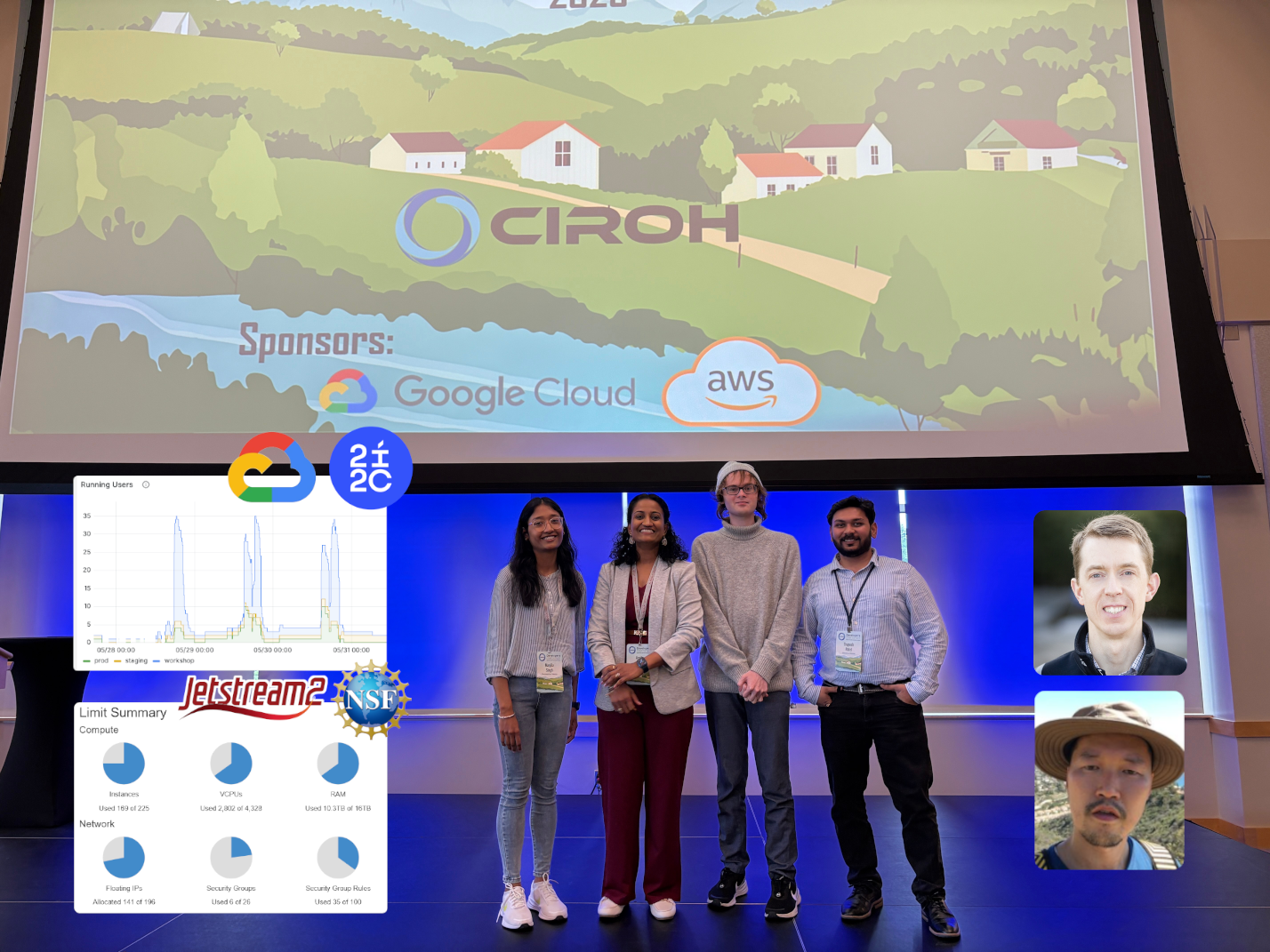
Image of CIROH's Research Cyberinfrastructure and DevOps team. On the left, two graphs are shown depicting usage for the Google Cloud-2i2c and Jetstream2 environments.

CIROH's Research Cyberinfrastructure and DevOps team.
Left to right, top to bottom:
Manjila Singh, Arpita Patel, Nia Minor, Trupesh Patel, James Halgren; Benjamin Lee.

DevCon 2025: Hydroinformatics and Research CyberInfrastructure Keynote

· 5 min read
Arpita Patel
DevOps Manager and Enterprise ArchitectAlabama Water Institute

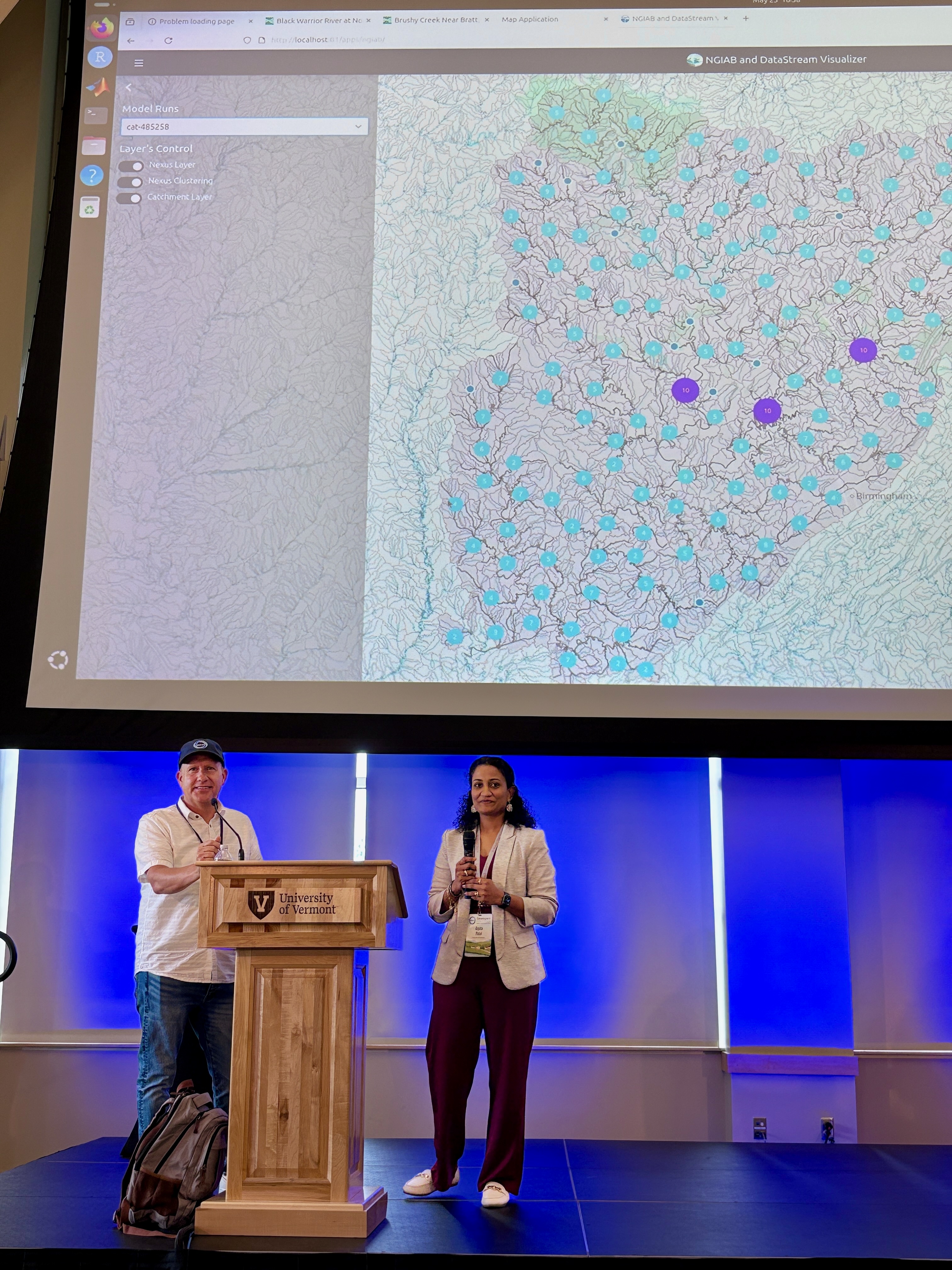
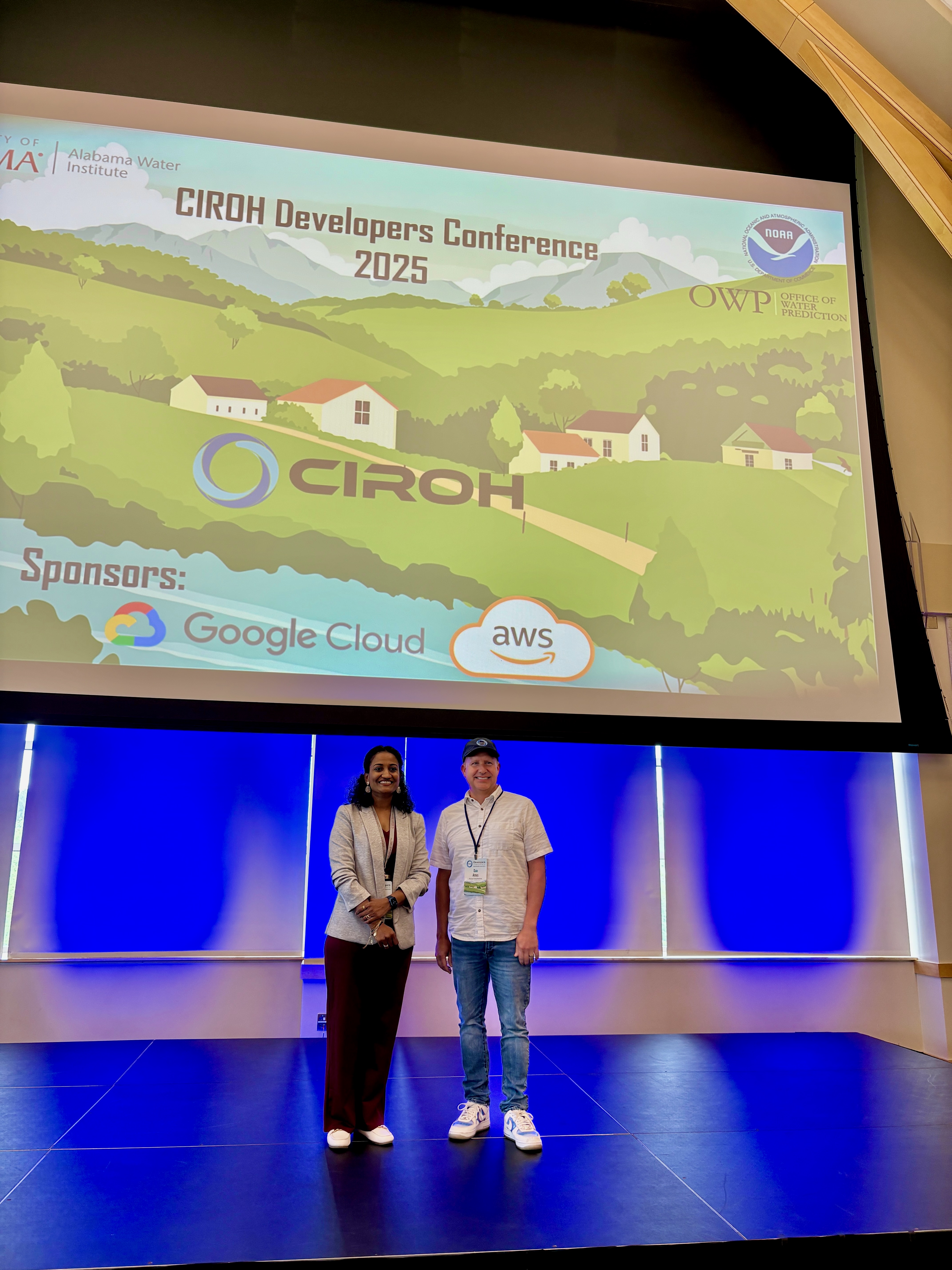
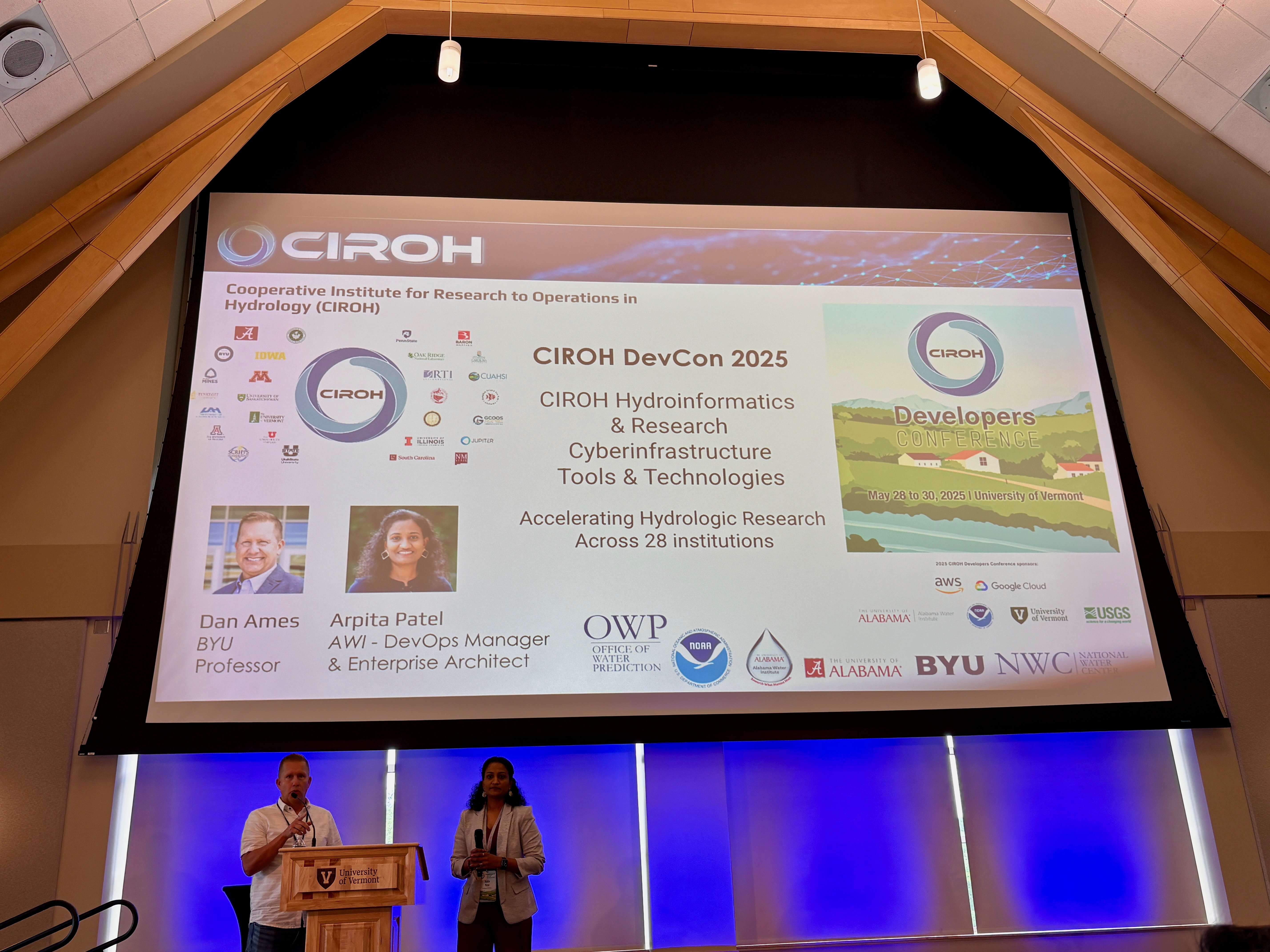
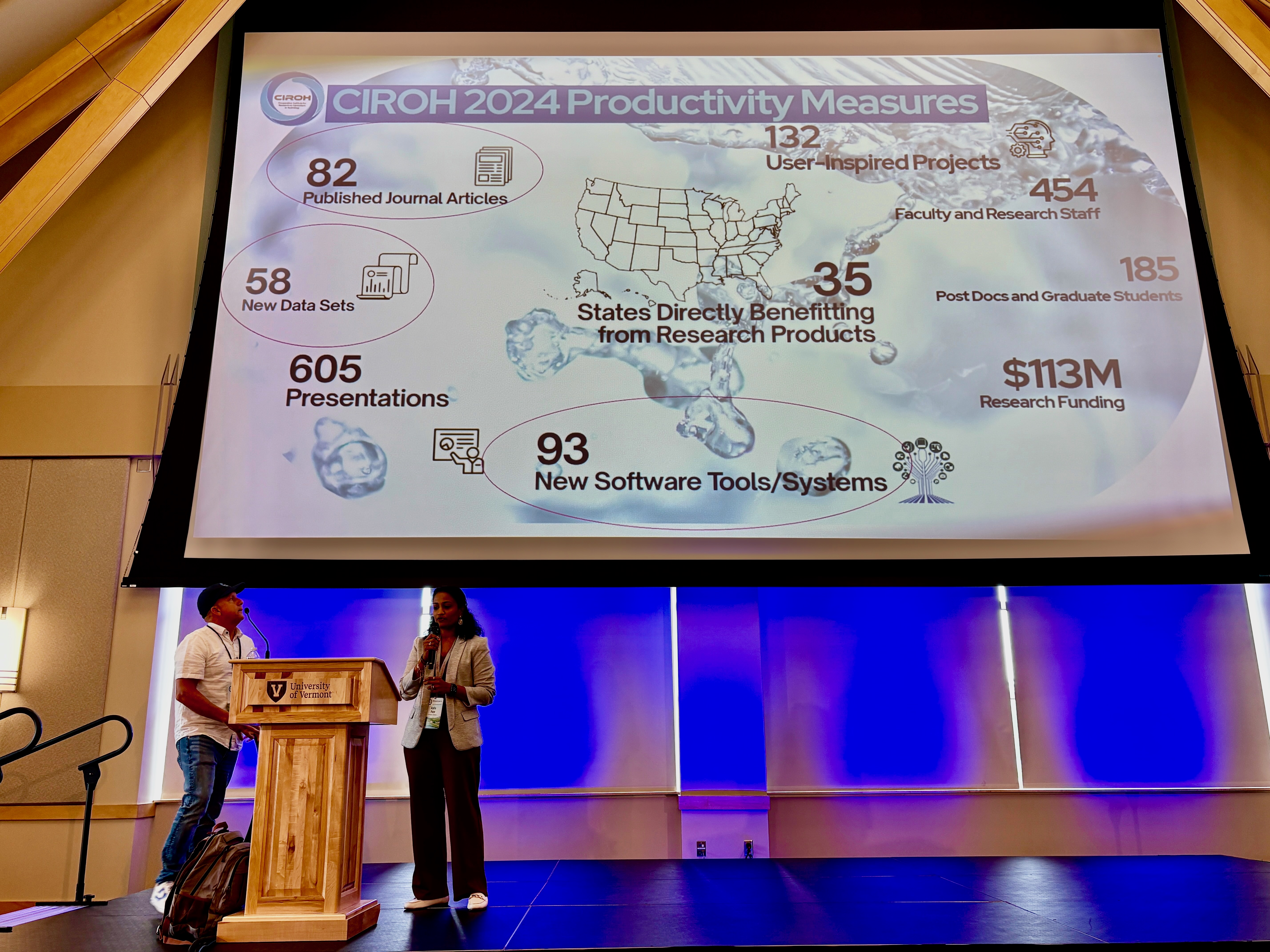
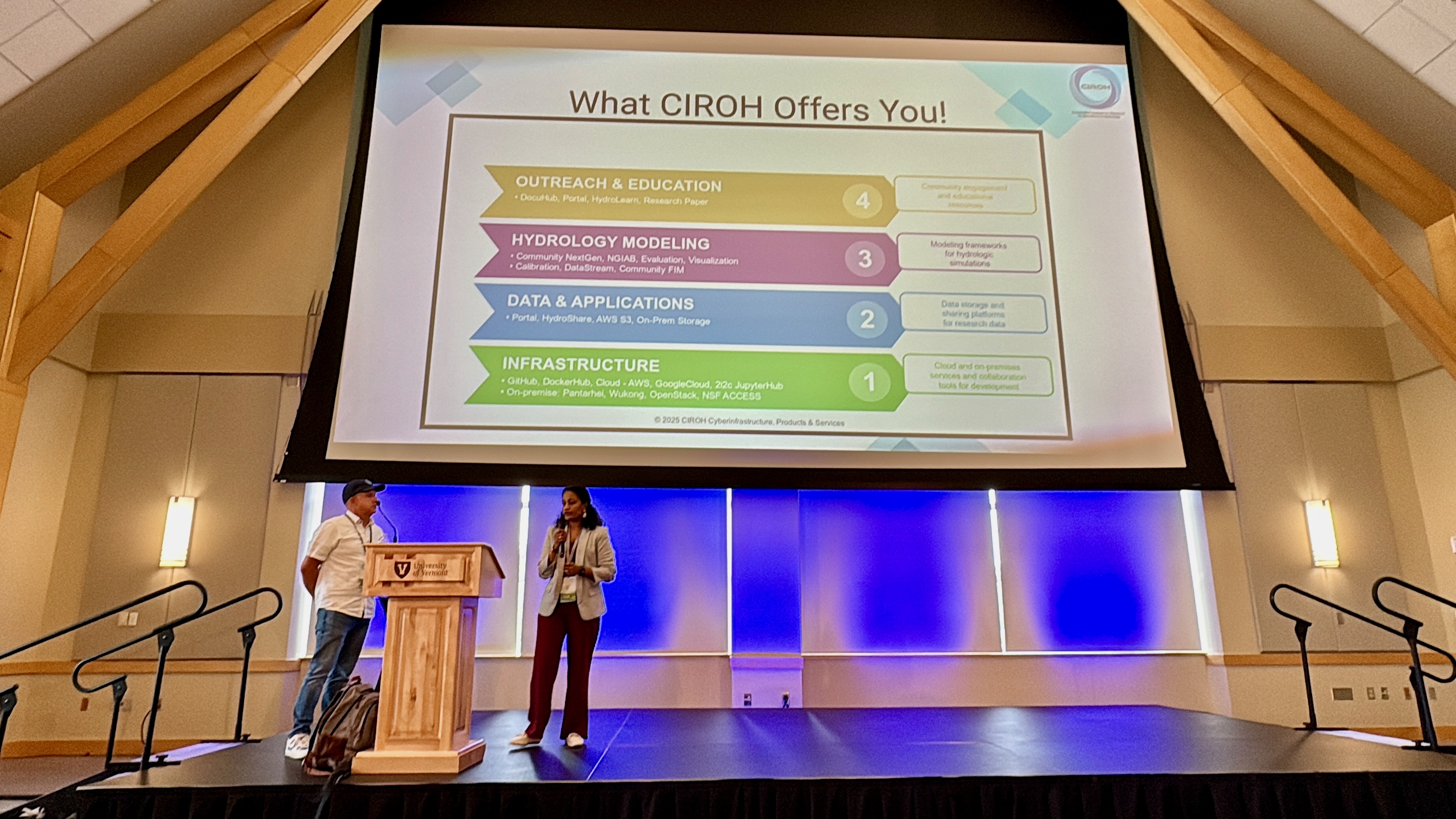
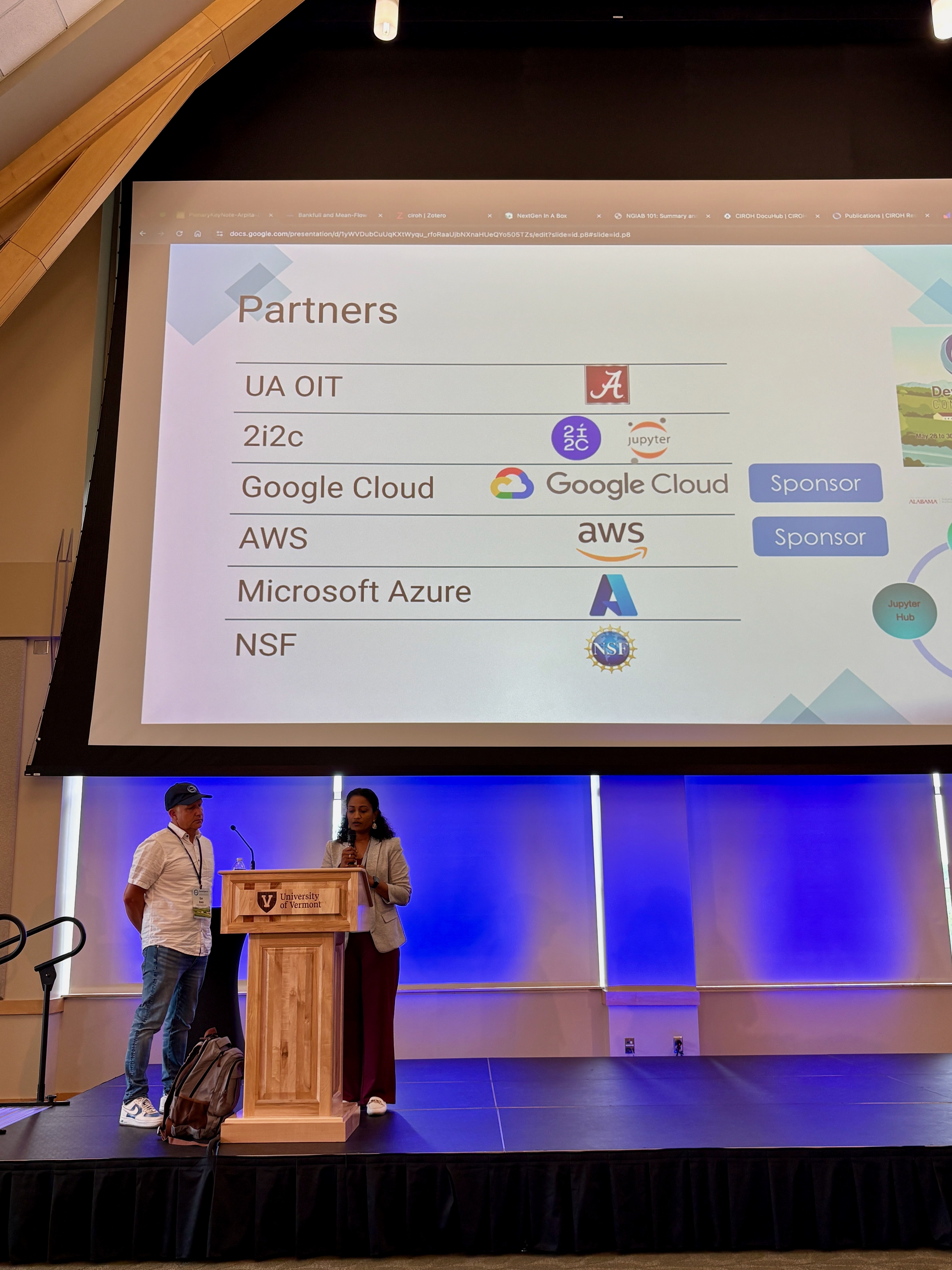
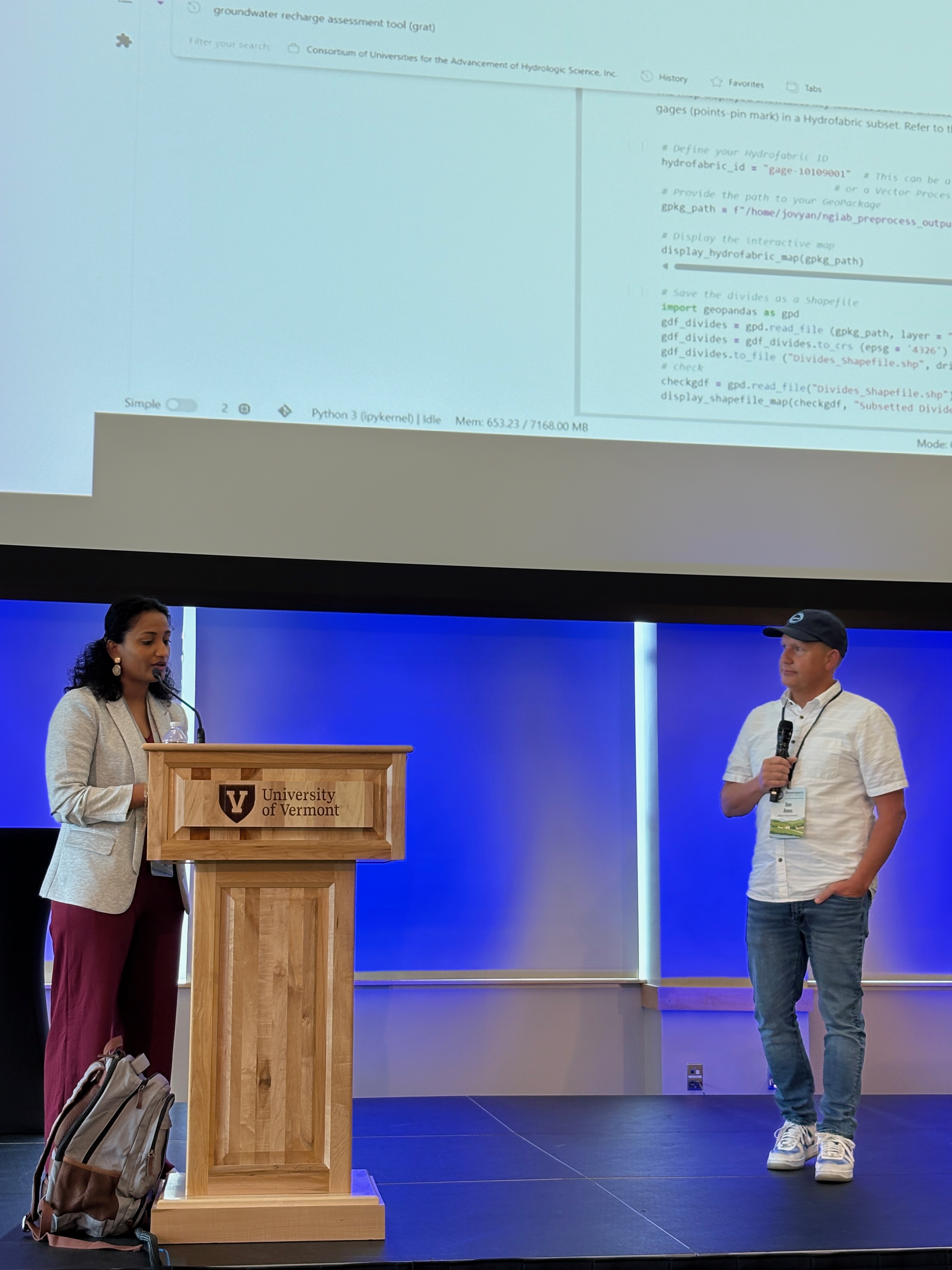
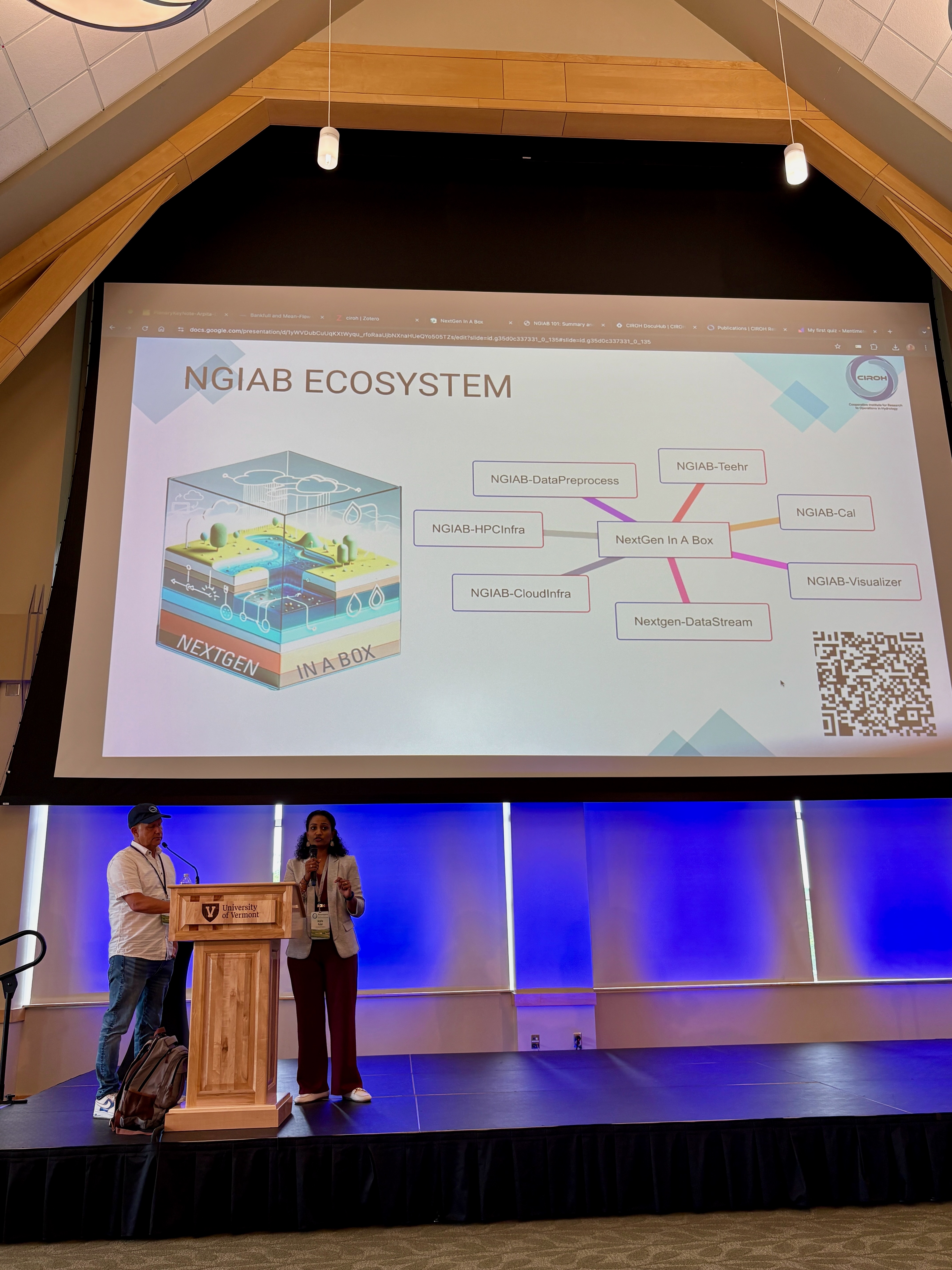
Last week, I had the incredible opportunity to co-present a keynote at the CIROH Developers Conference (DevCon 2025), which attracted over 200 attendees. This presentation, which I presented alongside Dan Ames, focused on "CIROH HydroInformatics and Research Cyberinfrastructure." It was a fantastic experience to share insights into the powerful tools and technologies that CIROH engineers, students, researchers have been developing to advance hydrological research and operations.