10 posts tagged with "Cloud Services"

View All Tags

NextGen In A Box (NGIAB) and CIROH Cyberinfrastructure Power Flash Flood Research at the 2026 Summer Institute


· 8 min read
Alex Lastner
Graduate StudentUniversity of Maryland, College Park
Danna Villarreal
PhD StudentUniversity of Arkansas
Bikas Gupta
PhD StudentUniversity of Texas at Arlington
Jessica Keiser
Master's StudentSan Diego State University
Leo Lonzarich
Graduate ResearcherPennsylvania State University
Azizur Rahman
Azizur Rahman
PhD StudentUniversity of Texas at Arlington
Aldo Andres Tapia Araya
PhD Student, HydrologyThe University of Arizona
Amirhossein Montazeri
PhD Student, Computing (Data Science emphasis)Boise State University
Niloufar Soheili
PhD Student, Water Resources and Environmental EngineeringThe City College of New York (CUNY)
Mohammad Mosavat
PhD StudentThe University of Alabama
Mohamed Abdelkader
Assistant Research ScientistUniversity of Iowa
Humberto Vergara
Assistant Professor, University of IowaAssociate Director, Iowa Flood Center

On July 4, 2025, a flash flood on the Guadalupe River caused 119 fatalities in Kerr County, Texas. It was the deadliest flash flood in the United States since 1976, and a reminder that flash floods remain among the most dangerous weather hazards in the country. Forecasting them means working at the speed and scale of the storm: small basins, minutes to hours, and rainfall estimates that can make or break the prediction.

That challenge set the agenda for our theme at the 2026 Water Prediction Innovators Summer Institute: Advancing the Use of Quantitative Precipitation Inputs into the NextGen Framework. Ten graduate students in three teams (Don't Runoff!, FlashCast, and The Post-Processors) had seven weeks to bring sub-hourly radar rainfall, precipitation uncertainty, and ensemble forecasting methods into the NextGen Water Resources Modeling Framework. Seven weeks is not much, and the teams could not spend half of it compiling a modeling framework or downloading terabytes of radar data to laptops. Fortunately, they did not have to. The CIROH cyberinfrastructure team carried that load.
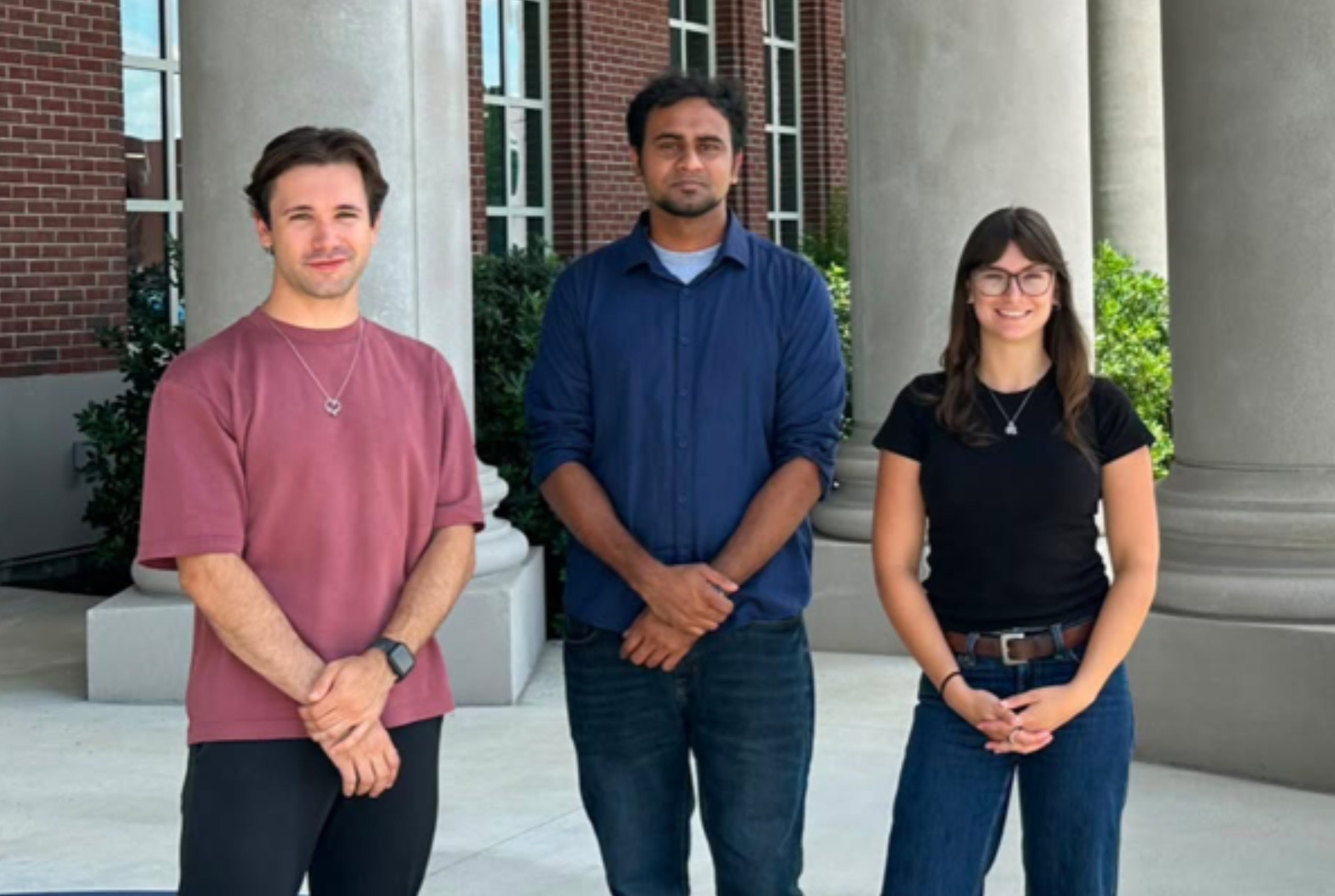
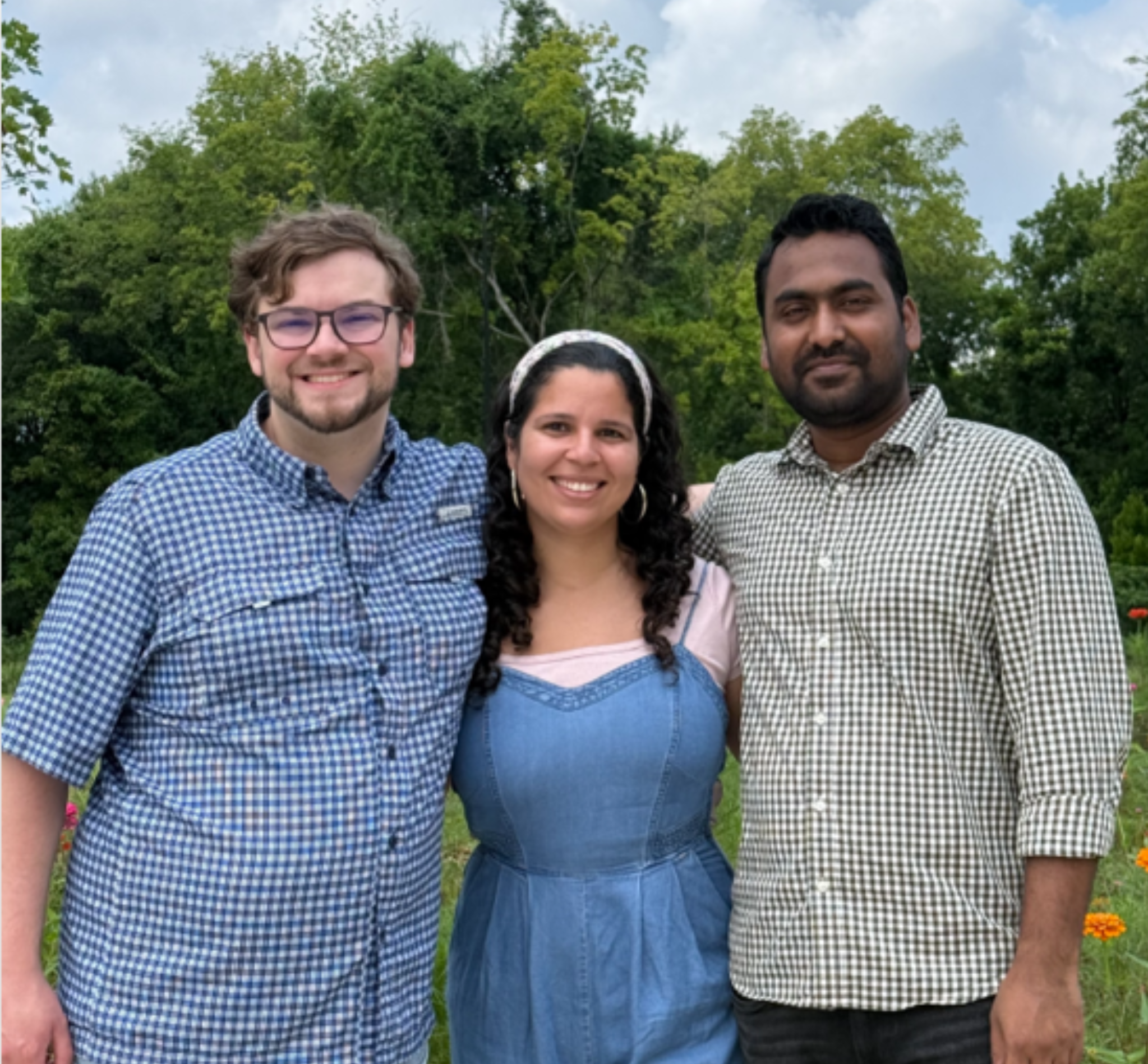
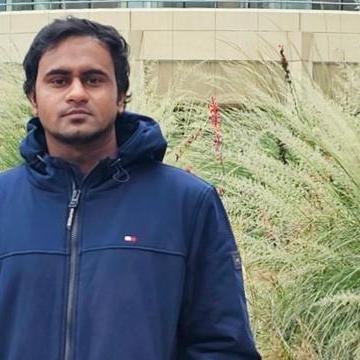
Team Don't Runoff! members Leo Lonzarich, Azizur Rahman, and Jessica Keiser.
Team Don't Runoff! (left to right): Leo Lonzarich, Azizur Rahman, Jessica Keiser.
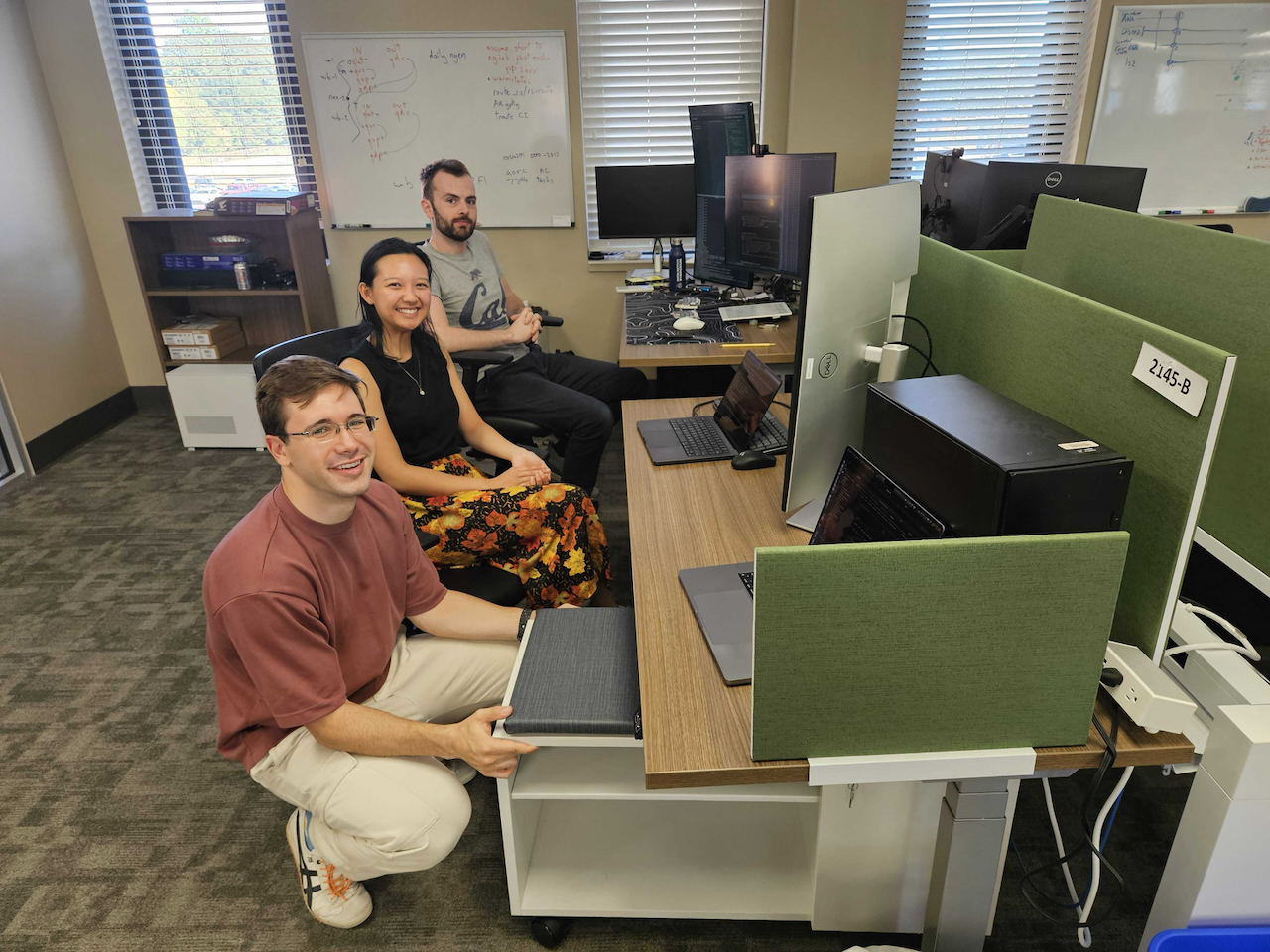
Team FlashCast members Alex Lastner, Danna Villarreal, and Bikas Gupta.
Team FlashCast (left to right): Alex Lastner, Danna Villarreal, Bikas Gupta.
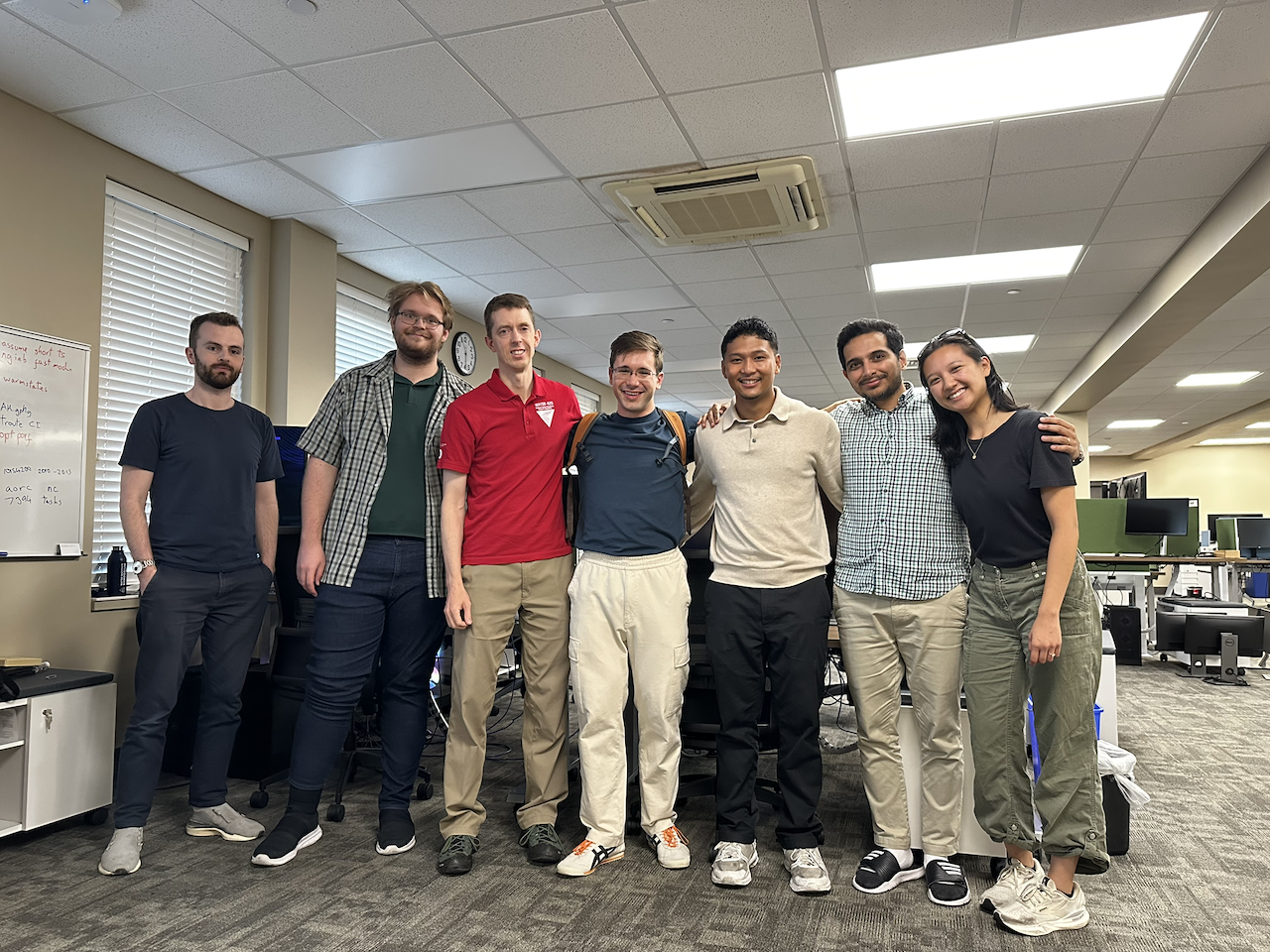
Team The Post-Processors members Mohammad Mosavat, Niloufar Soheili, Aldo Andres Tapia Araya, and Amirhossein Montazeri.
Team The Post-Processors (left to right): Mohammad Mosavat, Niloufar Soheili, Aldo Andres Tapia Araya, Amirhossein Montazeri.

The framework fits in the Box

NextGen is powerful but challenging to run. NextGen In A Box (NGIAB), CIROH's containerized distribution with more than 41,000 Docker pulls, turns that setup problem into a single pull command. This year's Summer Institute members were able to hit the ground running after just a single one-hour NGIAB workshop, demonstrating its sheer accessibility.

However, the teams did more than just run it. NGIAB is also an open box, and they took full advantage by extending it:

  • FlashCast built a modified NGIAB Docker image that runs CFE and T-Route on a 15 minute timestep and forced it with 15 minute MRMS radar rainfall, expanding the framework's standard hourly configuration to the sub-hourly scales flash floods demand.
  • The Post-Processors modified the NGIAB data preprocess library so NextGen could ingest MRMS radar estimates and HRRR forecast rainfall in place of the default AORC forcing. They then simulated 8,474 catchments around Ellicott City, Maryland.
  • Don't Runoff! built a volume-preserving workflow that maps 2 minute, 1 km MRMS rainfall onto NextGen Hydrofabric catchments and used it to drive dHBV2-Flash, a new sub-hourly differentiable model designed for the framework.

Every modification lives in a container or a public repository. Any researcher can pull the same image, rerun the same experiment, and build on it. That is the point of the box: NGIAB enables maximal portability and reproducibility to maximize research's impact. For the complete set of shared resources, see each team's final report.

R2OHC Platform: NSF Jetstream2 and NGIAB did the heavy lifting

None of this fits on a laptop. FlashCast alone ran 2,280 simulation scenarios per basin across three flash flood case studies (Asheville NC, Pittsburgh PA, and Kerrville TX) — 6,840 NextGen runs in total. The Post-Processors pushed 500 synthetic storms through NGIAB to train a neural network surrogate, on top of storm displacement experiments across thousands of catchments. Don't Runoff! processed radar rainfall for over 5,000 flash flood events across the country and trained a differentiable model on years of 15-minute data.

The computing resources came from CIROH cyberinfrastructure, which provided allocations on NSF Jetstream2, Indiana University's NSF-funded academic cloud, through CIROH's ACCESS allocation (EES240087). JetStream2 hosted virtual machines sized for each team's workload, from batch NGIAB runs to model training. The rainfall came from NOAA open data: 2-minute MRMS radar estimates, hourly AORC forcings, and HRRR forecasts, all pulled straight from public cloud archives. CUAHSI HydroShare closed the loop as the publication home for datasets and supplementary materials, and the NWC-CUAHSI-Summer-Institute GitHub organization hosts the code.

What the teams built

Team Don't Runoff! delivered RUNOFF v1.0, a CONUS-scale catalog of over 5,000 flash flood events from the NOAA Storm Events Database, each mapped to hydrofabric catchments and paired with a USGS gauge and quality-controlled MRMS rainfall. RUNOFF is designed to conduct flash flood modeling experiments using high-quality precipitation estimates. They also delivered dHBV2-Flash, a 15-minute differentiable rainfall-runoff model that captured event peaks in the Upper Neuse basin with a median peak flow bias of 16% across 1,132 events. Supplementary materials are on HydroShare.

Team FlashCast addressed a question at the heart of flash flood prediction: how fine, and how accurate, does the precipitation input need to be? Their sensitivity pipeline converts thousands of NGIAB runs into critical uncertainty matrices, the precipitation uncertainty a forecast can tolerate before predictions stop being actionable. Early results from the three case studies point to a scale-dependent answer: for these events, resolution finer than about 7 km and 1 hour added little on its own, as long as storm volume was preserved. The pipeline is built to put that threshold to the test across many more basins and storms. Methods and figures are on HydroShare.

The Post-Processors built NCET, the Neighboring Catchment Ensemble Technique, which turns a single deterministic NextGen simulation into an ensemble streamflow forecast by borrowing hydrographs from neighboring catchments. Applied to the May 2018 Ellicott City flash flood with a real HRRR forecast, NCET recovered a flood the deterministic forecast missed, with the largest gains in probabilistic skill when the ensemble weights were aimed along the storm's displacement. That early result suggests storm location, more than catchment similarity, should steer the ensemble, and it points to a computationally inexpensive path toward flash flood forecasting within NextGen. The team also prototyped Replace and Route, a BMI component that lets NextGen borrow discharge from high-fidelity external models at hydrofabric nexus points. Evaluation materials are on HydroShare.

From asking research questions to prototyping workflows, in seven weeks

Each product is hydrofabric-native, open, and packaged into containers, BMI modules, and reproducible pipelines — the way that the Community NextGen ecosystem expects. This ease of access and reuse is research to operations in miniature, and it is what CIROH cyberinfrastructure is for. NGIAB collapsed setup time from weeks to minutes. NSF's Jetstream2 scaled experiments beyond what any student laptop could run. Open data archives fed the models, and HydroShare and GitHub made every result citable and reusable. The students arrived with research questions. They left behind open prototypes, datasets, and code for the community to build on.


The 2026 Water Prediction Innovators Summer Institute took place June 8 — July 22, 2026. 24 graduate student fellows from 21 unique U.S. institutions formed research teams under the guidance of seven Theme Leaders, spanning topics from precipitation forecasting to flood risk communication. Research outcomes are summarized in the 2026 WPI SI final report.

The teams thank the CIROH Cyberinfrastructure & DevOps team and Hydroinformatics team at the Alabama Water Institute (Arpita Patel, Josh Cunningham, Quinn Lee, Nia Minor, and colleagues) for cloud provisioning and NextGen support throughout the program, Dr. Fred Ogden for guidance on developments with the NextGen framework, and the Summer Institute coordinators, Megan Vardaman and Nana Oye Djan. This work used Jetstream2 through allocation EES240087 from the NSF ACCESS program. This research was supported by the Cooperative Institute for Research to Operations in Hydrology (CIROH) under award NA22NWS4320003 from the NOAA Cooperative Institute Program.

Hourly Differentiable Modeling Arrives in the NGIAB-NRDS NextGen Ecosystem

· 9 min read
Leo Lonzarich
Graduate ResearcherPennsylvania State University
Quinn Lee
Programmer AnalystAlabama Water Institute
Josh Cunningham
Software EngineerAlabama Water Institute
Benjamin Lee
Development Operations EngineerAlabama Water Institute
Arpita Patel
Assistant Director, IT and DevOpsAlabama Water Institute

In October 2025, Penn State's Multi-scale Hydrology, Processes and Intelligence group (MHPI), led by Dr. Chaopeng Shen, and the Alabama Water Institute (AWI), led by Steve Burian and Arpita Patel, achieved a milestone R2O effort: the preliminary integration of δHBV 2.0 [4] -- a daily-scale, high-resolution, distributed differentiable model -- into a NextGen ecosystem. This resulted in the first adoption of a differentiable model into NextGen In A Box (NGIAB) [2] and provided an opportunity for CIROH researchers to fine-tune the δHBV 2.0 architecture for NextGen operation.

Having proven viability for daily timescale predictions on high-resolution river networks [4], MHPI researchers recently adapted δHBV 2.0 into a multi-timescale architecture designed to parameterize HBV and simulate streamflow at hourly intervals, at scale, across the NextGen HydroFabric. This new model, δHBV 2.0 MTS (Multi-TimeScale) [5], is a fusion of a daily and hourly δHBV 2.0 model designed to efficiently handle ML training with high geospatial and temporal complexity. (See MTS Architecture for more details about this construction.)

With δHBV 2.0 MTS maintaining similar forecasting skill compared to its daily-scale counterpart [5], Penn State and AWI were once again reunited in a joint effort to embed hourly scale differentiable modeling within AWI's operational ecosystem as a demonstration of model viability and to facilitate open access to its runtime.

Differentiable Models

δHBV 2.0 and δHBV 2.0 MTS differentiable model constructions are briefly outlined here to contextualize the development efforts. For further detail, see each model's respective citation. At their core, differentiable models embed traditional process-based equations (here, the HBV rainfall-runoff model) inside a machine learning training loop. Because these models are designed to be differentiable (e.g., in PyTorch), gradients flow end-to-end from the loss function back through the physical equations and into the neural networks that supply their parameters. This lets the model learn optimal parameterizations directly from observed data while still obeying mass-balance and storage constraints encoded in HBV -- combining interpretability and physical consistency of process-based hydrology with the flexibility of deep learning.

Building Bridges: CIROH–Penn State Collaboration Formalizes Differentiable Modeling for NRDS

· 6 min read
Leo Lonzarich
Graduate ResearcherPennsylvania State University
Quinn Lee
Programmer AnalystAlabama Water Institute
Josh Cunningham
Software EngineerAlabama Water Institute
Arpita Patel
Assistant Director, IT and DevOpsAlabama Water Institute
James Halgren
Assistant Director of ScienceAlabama Water Institute

Almost from the start, 2025 has been a banner year in hydrologic modeling, with advancements in capabilities on both sides of the aisle of CIROH's research-to-operations (R2O) pipeline.

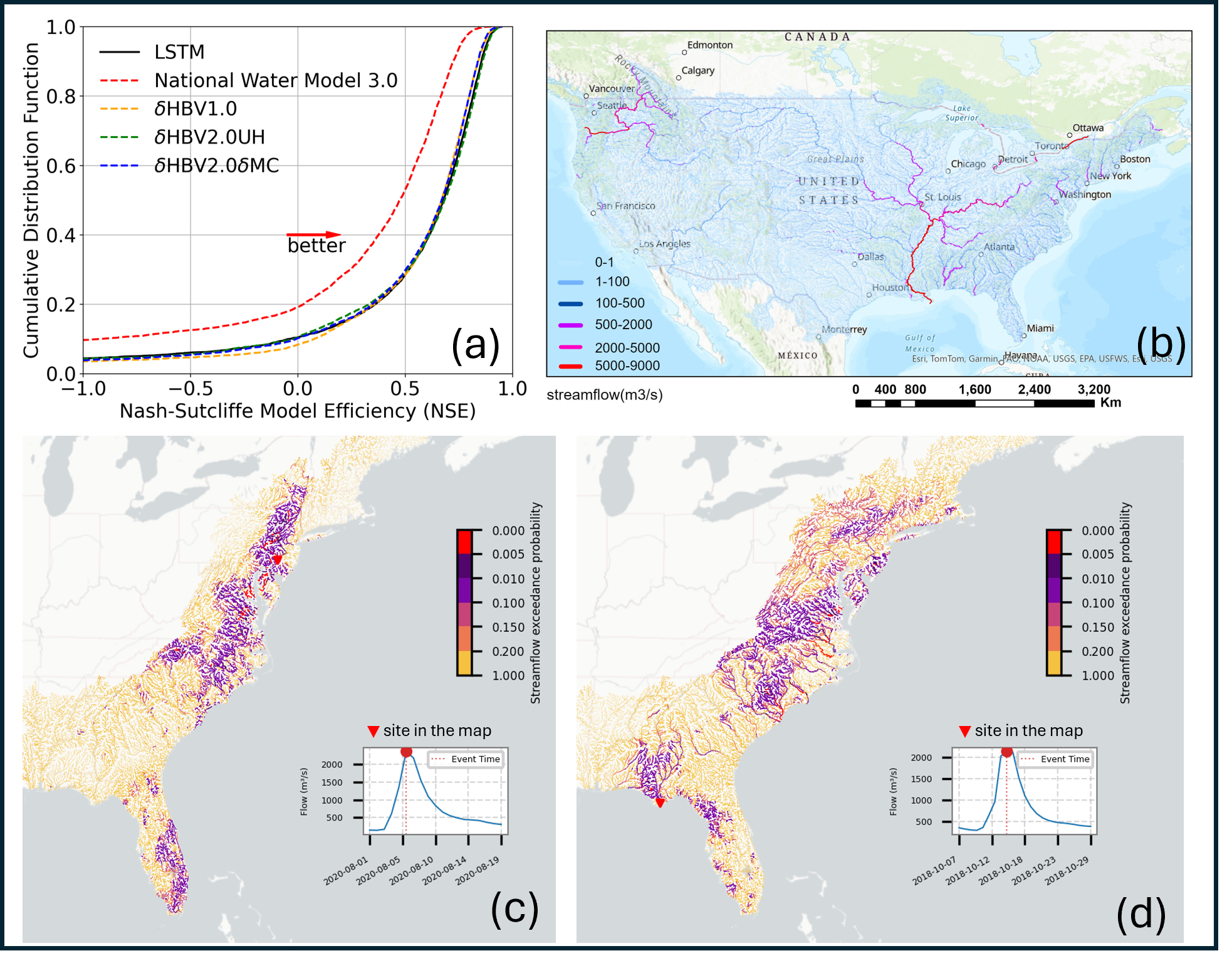
  • From the research skunkworks, Penn State's MHPI group, led by Dr. Chaopeng Shen introduced a new generation of distributed, differentiable hydrologic models spearheaded by δHBV 2.0. Capable of high-resolution, continental-scale streamflow forecasting across the CONUS Hydrofabric, δHBV 2.0 fuses process-based modeling and machine learning to enable efficient parameter calibration and interpretable predictions at scale -- with demonstrated viability as a National Water Model 3.0 successor.

AORC Data in Your Hands: User-Friendly Jupyter Notebooks for Data Retrieval and Analysis via CIROH-2i2c JupyterHub Notebooks

· 3 min read
Homa Salehabadi
Postdoctoral ResearcherUtah State University
David Tarboton
ProfessorUtah Water Research Laboratory
Ayman Nassar
Postdoctoral ResearcherUtah State University

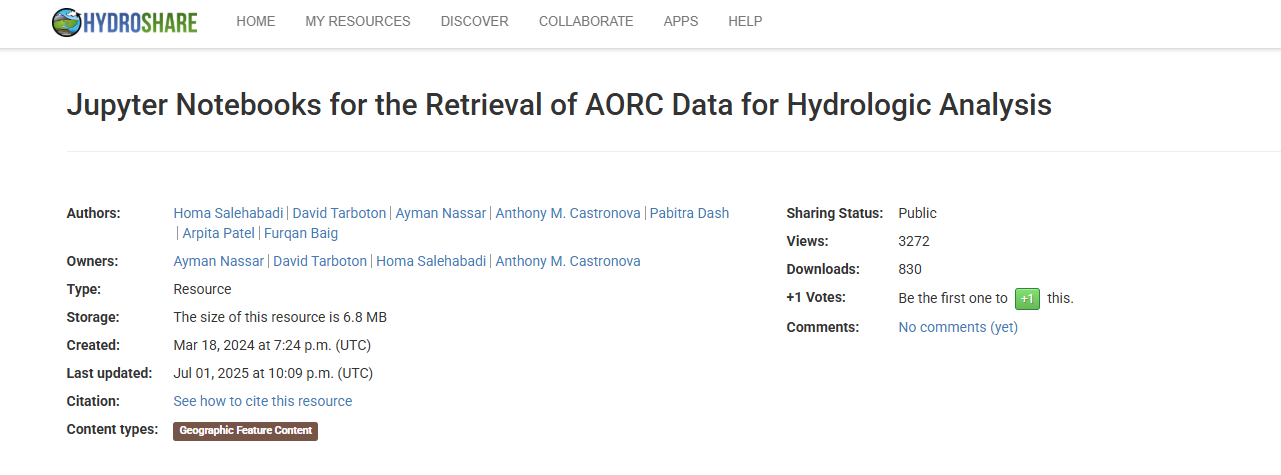
Screenshot of Hydroshare Resource

A screenshot of the HydroShare resource page for Jupyter Notebooks for the Retrieval of AORC Data for Hydrologic Analysis.

The Analysis of Record for Calibration (AORC) dataset is recognized as a high-value resource for the CUAHSI and CIROH community. This dataset is hosted by NOAA via Amazon Web Services (AWS) and is available in two primary formats: a latitude-longitude gridded dataset and the National Water Model (NWM) projected dataset, part of the NWM Retrospective archive. To enhance accessibility and illustrate analysis capabilities, we developed four user-friendly Jupyter Notebooks that enable data retrieval for both specific points of interest and spatial domains defined by shapefiles:

δHBV2.0: How NGIAB and Wukong HPC Streamlined Advanced Hydrologic Modeling

· 2 min read
Yalan Song
Research Assistant ProfessorPennsylvania State University
Leo Lonzarich
Graduate ResearcherPennsylvania State University
Arpita Patel
DevOps Manager and Enterprise ArchitectAlabama Water Institute
James Halgren
Assistant Director of ScienceAlabama Water Institute

Image of graphical outputs from the δHBV2.0 model

Predicting water flow with precision across the vast U.S. landscape is a complex challenge. That's why Song et al. 2024 developed δHBV2.0, a cutting-edge hydrologic model. It’s built with high-resolution modeling of physics to deliver seamless, highly accurate streamflow simulations, even down to individual sub-basins. It's already proven to be a major improvement, performing better than older tools at about 4,000 measurement sites. We also provide a comprehensive 40-year water dataset for ~180,000 river reaches to support this.

Penn State research group pushed δHBV2.0 further, training it with even more detailed river data and integrating other trusted models, aiming to make it a key part of the NextGen national water modeling system (as a potential NWM3.0 successor). But here’s a common hurdle: making powerful scientific tools like this easy and reliable for everyone to use within a larger framework can be tough. Setup issues, runtime errors, and inconsistent results can frustrate users.

NGIAB stepped in to solve exactly this problem. Team has taken the complexity out of using the operations-ready models within NextGen by creating one unified, reliable package. Thanks to NGIAB, users don't have to worry about tricky setups or whether the model will run correctly. NGIAB ensures that our models are compatible everywhere and, most importantly, that they run exactly as designed, consistently and faithfully, every single time, no babysitting required. This means users get the full power of our advanced modeling, without the headaches.

Pennsylvania State University Researchers Leverage CIROH Cyberinfrastructure for Advanced Hydrological Modeling

· 3 min read
Arpita Patel
DevOps Manager and Enterprise ArchitectAlabama Water Institute
Yalan Song
Research Assistant ProfessorPennsylvania State University
Tadd Bindas
Graduate ResearcherPennsylvania State University

Pennsylvania State University (PSU) researchers have been leveraging CIROH Cyberinfrastructure to tackle complex hydrological modeling challenges. This post highlights their innovative approach using the Wukong computing platform in conjunction with Amazon S3 bucket storage to efficiently process and analyze large-scale environmental datasets. 🚀

Accessing National Water Model (NWM) Data via Google Cloud BigQuery API

· 4 min read
Arpita Patel
DevOps Manager and Enterprise ArchitectAlabama Water Institute
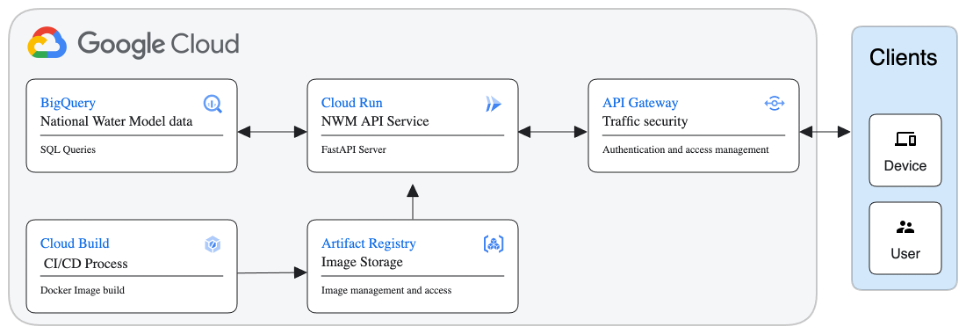
gcp architectrure diagram

Image Source: https://github.com/BYU-Hydroinformatics/api-nwm-gcp


Several important historical and ongoing National Water Model (NWM) datasets are now available on Google Cloud BigQuery, which makes them queryable through SQL using Google Cloud console. Some of these data sets are also accessible through an API (e.g. using Python). These datasets and their current status are as follows:

ProductCloud Console SQLCIROH APIHistoricalDaily Updates
Medium-range forecastsXXXX
Long-range forecastsXXXX
Analysis and AssimilationXXXX
Retrospective Data (NWM v3)XX
Return PeriodsXX

CIROH Cloud User Success Story

· 3 min read
Arpita Patel
DevOps Manager and Enterprise ArchitectAlabama Water Institute

This month, we are excited to showcase two case studies that utilized our cyberinfrastructure tools and services. These case studies demonstrate how CIROH's cyberinfrastructure is being utilized to support hydrological research and operational advancements.

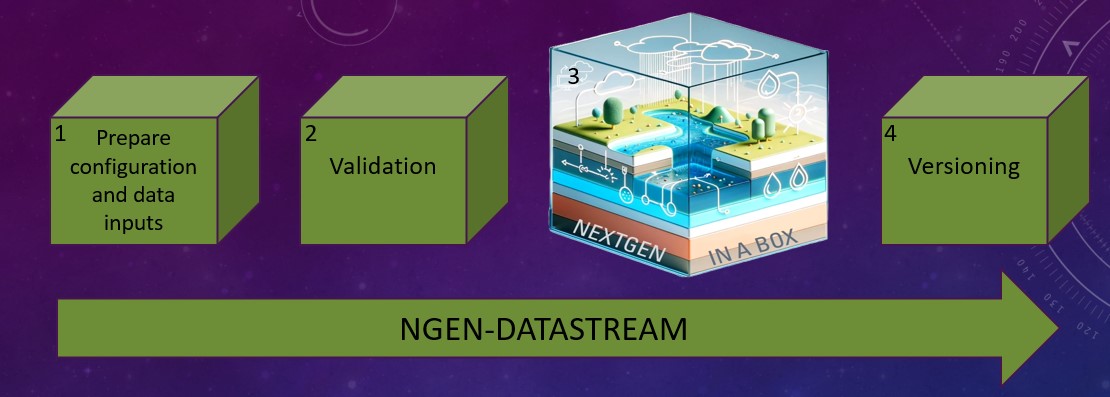
1. ngen-datastream and NGIAB

ngen-datastream image

NextGen Monthly News Update - January 2024

· 2 min read
Arpita Patel
DevOps Manager and Enterprise ArchitectAlabama Water Institute

Welcome to the January edition of the CIROH Hub blog, where we share the latest updates and news about the Community NextGen project monthly. NextGen is a cutting-edge hydrologic modeling framework that aims to advance the science and practice of hydrology and water resources management. In this month's blog, we will highlight some of the recent achievements and developments of the Community NextGen team.